Quick answer: Start your Korean pantry staples with a soy sauce suited to your recipes, toasted sesame oil, and either gochujang or doenjang. Add gochugaru, ssamjang, gim, or miyeok when a planned meal calls for them, rather than buying every jar at once.
A useful Korean pantry is a small set of ingredients with clear jobs, not a shelf full of similar-looking packages. This guide separates those jobs and explains what to check before choosing a product. The examples come from manufacturer pages, not personal tasting or kitchen tests.
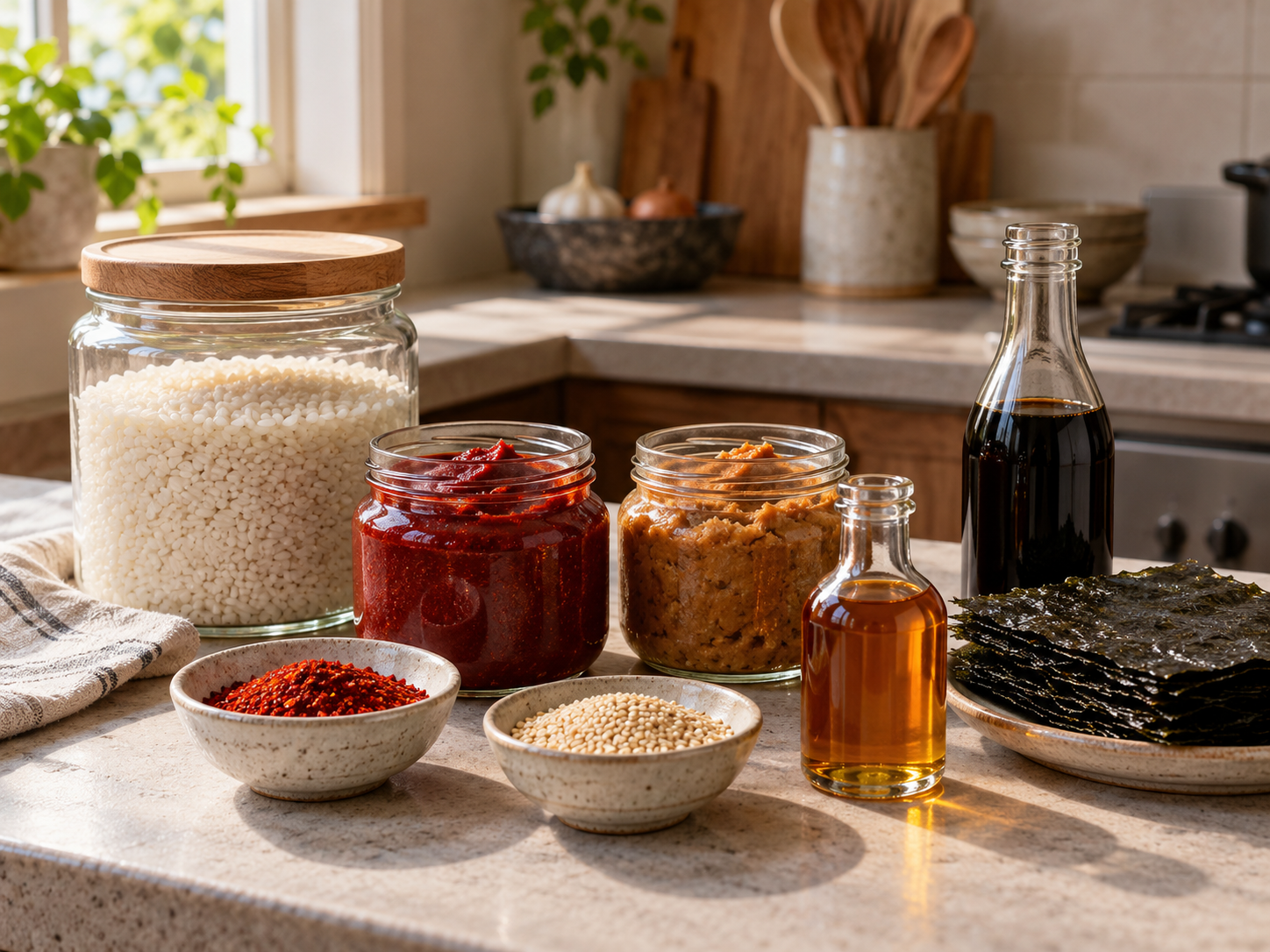
| Ingredient | Function | Buying decision |
|---|---|---|
| Soy sauce | Savory seasoning; Sempio lists its 501 for stews and stir-fries. | Start here if those dishes are on your list. Match the exact type named in your recipe. |
| Toasted sesame oil | A finishing touch for rice dishes and dipping sauces. | Choose a product explicitly labeled toasted sesame oil; check its ingredients. |
| Gochujang | Fermented red chili paste. | Choose it for recipes calling for paste, not dry pepper. |
| Gochugaru | Ground red pepper; Sempio offers a coarse version for kimchi. | Match the grind and intended use to your recipe. |
| Doenjang | Fermented soybean paste; O’food highlights it for stew. | Prioritize it if soybean-paste stew is your next project. |
| Ssamjang | Seasoned soybean paste or dipping sauce. | Choose it for a dip rather than assuming plain doenjang will do the same job. |
| Gim | Korean seaweed sold in snack formats, among others. | For snacking, look for a package marked ready to eat. |
| Miyeok | Brown seaweed used in soups and salads. | Buy it for a specific recipe and follow its preparation directions. |
Source note: Functions are based on the O’food, Sempio, and bibigo pages linked below, reviewed October 24, 2026. The buying priorities are editorial suggestions, not a manufacturer ranking.
Choose Korean pantry staples around your next meals
Before shopping, choose two dishes you actually want to make. Copy their ingredient names onto a list, then mark anything you already own. The point is to build a Korean cooking pantry you will use, not to replace every bottle in your kitchen.
- Pick a main direction. For a stew-centered plan, investigate the exact soy sauce and paste your recipe names. For a dipping-sauce plan, compare ssamjang and toasted sesame oil instead.
- Check the product format. A paste, a pourable sauce, and dry flakes are different buying choices even when the label includes the same chili name.
- Choose a manageable size. Favor a size you can use according to the package directions. A large container is not automatically the right starter choice.
- Leave optional items for later. If neither meal uses miyeok or gochugaru, you do not need to add them just to complete a checklist.
Sempio describes Naturally Brewed Soy Sauce 501 as suitable for stews and stir-fried dishes. That is a useful example, not proof that every Korean soy sauce has the same intended use. Read the full product name instead of choosing by bottle color.
For sesame oil, Sempio’s Whole Sesame Seed Oil page specifically describes a toasted product and suggests it as a finishing touch for bibimbap or fried rice. Use that distinction when shopping: you are looking for the ingredient your recipe names, not simply any bottle containing the word sesame.
Check storage before buying the larger package
This guide does not assign one storage rule to all Korean condiments. Read the exact package for unopened storage, after-opening instructions, and its date marking. If an online description leaves those details out, check the physical label or ask the manufacturer before deciding a large container fits your routine.
A product page’s expiration period is not an after-opening deadline. Do not turn a listed shelf-life figure into a promise about how long an opened tub will last. Preparation and storage directions should come from the package you have, including any instructions on the local-market label.
Keep chili ingredients and soybean pastes separate
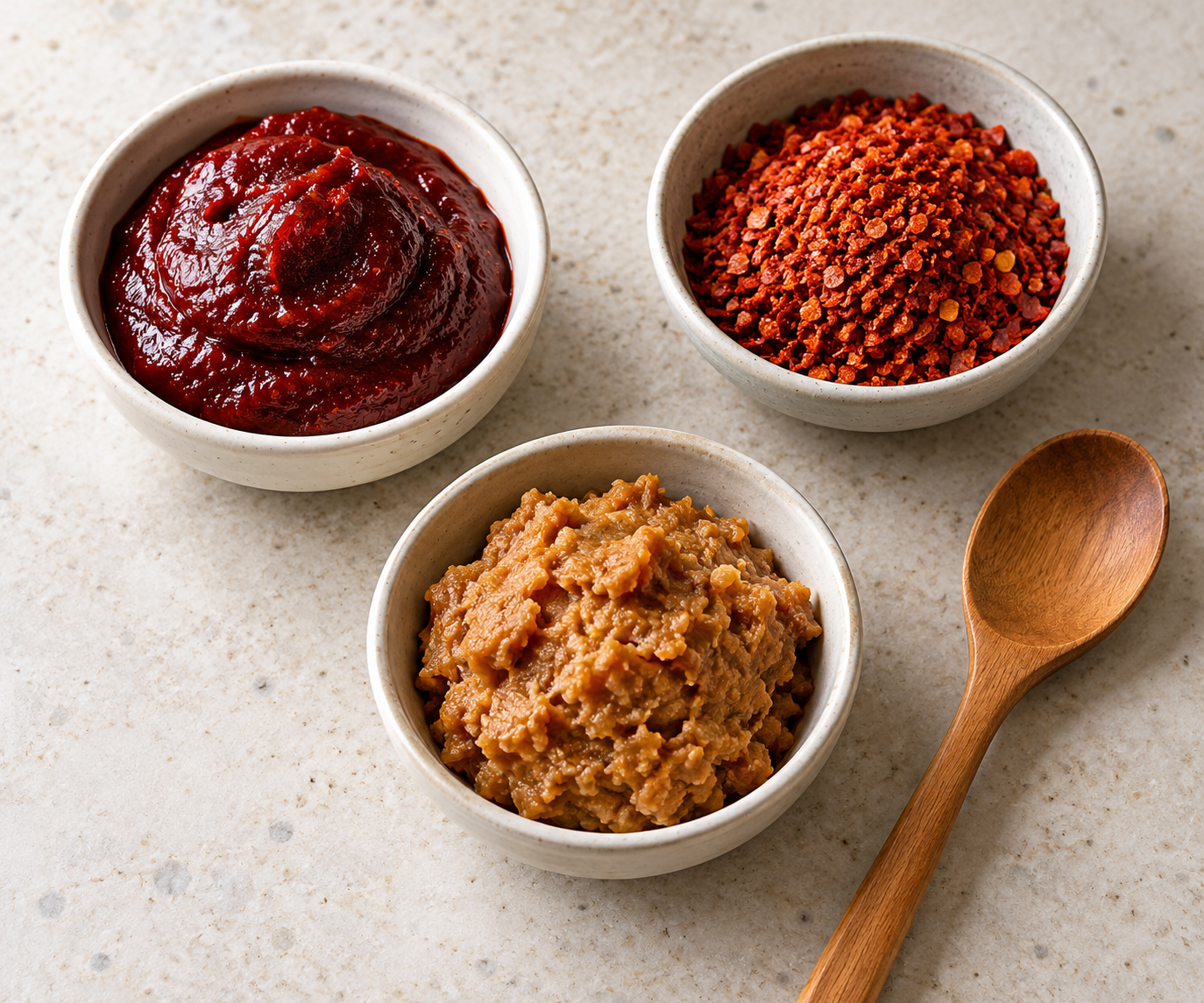
Gochujang is a fermented red chili paste. O’food uses that description for its classic condiment. When you want that product, read beyond the word gochujang: a prepared dipping or cooking sauce should not be assumed to be the same as a tub of paste.
Gochugaru is ground red pepper, not gochujang in dry form. Sempio’s Red Pepper Powder, Gochugaru for Kimchi lists red pepper as its ingredient and describes a coarse grind. That supports choosing it for a recipe asking for coarse kimchi pepper; it does not establish a universal grind or heat level for every gochugaru package.
Do not substitute these two one-for-one just because both involve red chili. One is a fermented paste and the cited example of the other is ground pepper. If you lack the named ingredient, use a recipe with its own substitution guidance rather than guessing a conversion.
Doenjang is fermented soybean paste. O’food describes it as made with meju, blocks of dried fermented soybeans, and highlights stew as a use. Choose it when that is the paste your recipe specifies.
Ssamjang is seasoned soybean paste. O’food’s US page calls its version a savory dipping sauce and pairs it with grilled meats, vegetables, and rice. It is a different purchasing decision from plain soybean paste, not merely another spelling of doenjang.
For a beginner basket, choose the paste that matches your next meal first. You can add another later. Brand descriptions can explain a product’s intended role, but they are not a reliable basis for ranking all brands by sweetness, heat, or intensity.
Choose gim or miyeok for the job you need
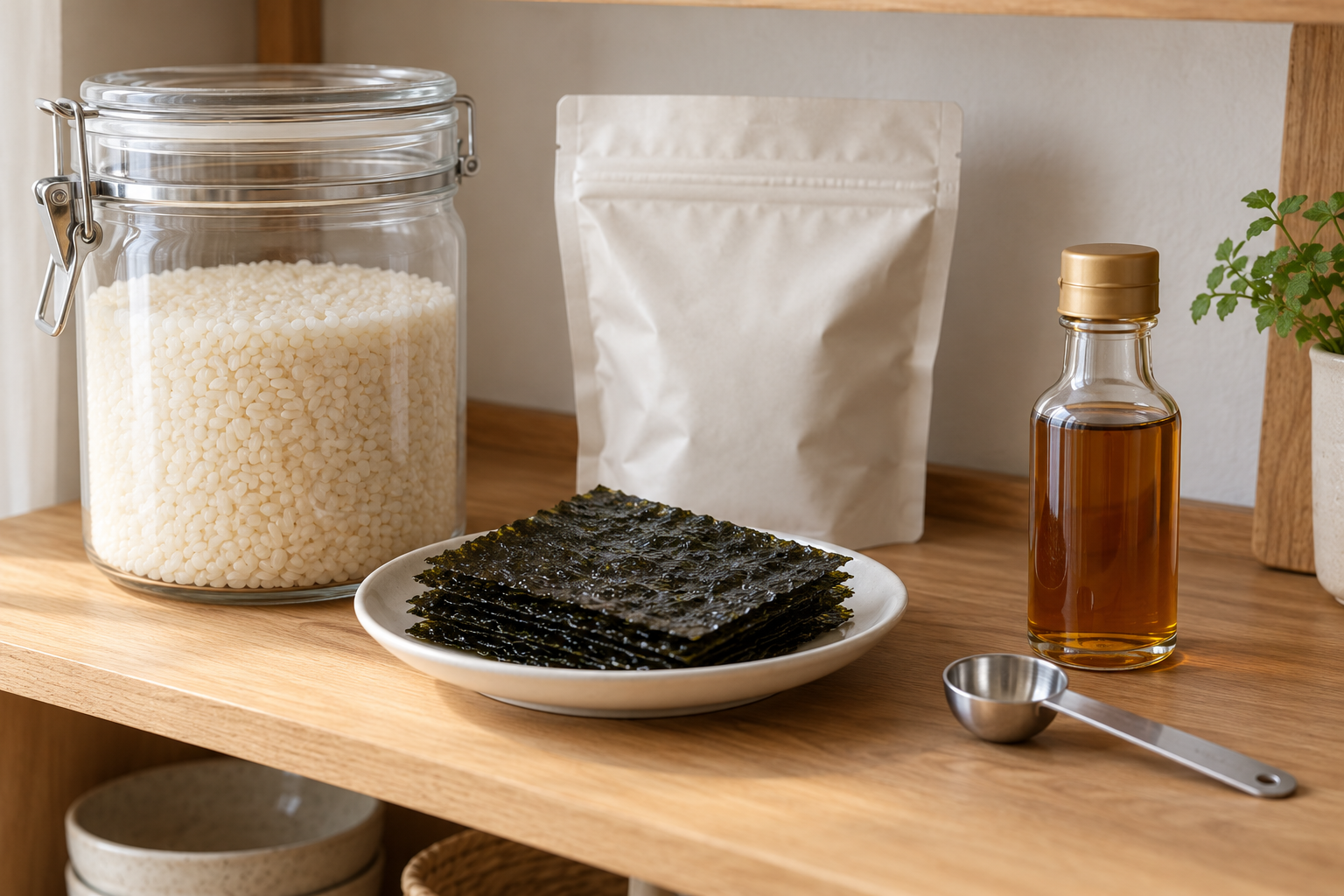
Seaweed is a broad shopping label. bibigo identifies its gim as Korean seaweed and describes crispy snack formats. Sempio identifies miyeok as brown seaweed for soups and salads. Those descriptions give you a more useful shopping distinction than the English word seaweed alone.
For example, bibigo’s US Sesame Seaweed Snacks page marks that exact product ready to eat. Its ingredient list includes dried seaweed, sunflower oil, sesame oil, sea salt, and rosemary extract. This is a seasoned snack example, not a description of every gim product.
Sempio’s Dried Brown Seaweed page describes a different product and a hydration step. Do not transfer that instruction to a seaweed snack, or assume another bag of miyeok has identical directions. This guide leaves soaking amounts, cooking times, and storage to your exact package and chosen recipe.
Before adding either to your cart, ask: am I buying a snack, an ingredient for soup, or the format a particular recipe names? Check the package size and preparation panel as well as the front label. For equipment planning, see our guide to Korean kitchen tools; ingredients and tools should serve the same meal plan.
Allergens and label notes
Use the ingredient and allergen information for the exact product sold in your country. Sempio’s 501 page lists wheat and soybeans in its allergy information. bibigo’s US sesame seaweed snack page lists sesame. These are product-specific examples, not universal statements about soy sauce, seaweed, or Korean food.
Read the ingredient list, any allergen statement, and any advisory wording each time you choose a package. Do not infer that an unmentioned allergen is absent from an entire product category. A short ingredient list on one manufacturer’s page also does not establish the contents of a competing product.
For US shopping, compare the local package with the US product page where one exists. If you are buying in Canada, the UK, or Australia, do not treat a US listing as confirmation of your version. bibigo explicitly notes that its US product information may vary in other countries.
If a label is unclear or conflicts with an online description, contact the manufacturer before buying. Our guide to Korean food labels and allergens explains what to look for without treating a Korean product name as an allergen guarantee.
FAQ
What Korean pantry staples should a beginner buy first?
Start with the ingredients for two meals, not a fixed master list. A soy sauce suited to those recipes, toasted sesame oil, and one relevant paste make a practical starting point. Add dry pepper or seaweed only when you have a use for it. Check each exact package before choosing the size.
What is the difference between gochujang and gochugaru?
Gochujang is fermented red chili paste, while gochugaru is ground red pepper. The Sempio gochugaru example in this guide is coarsely ground and intended for kimchi. These are different ingredient formats, so do not assume a spoonful of one replaces a spoonful of the other. Follow a recipe written for your ingredient.
Are doenjang and ssamjang the same thing?
No. O’food describes doenjang as fermented soybean paste and ssamjang as seasoned soybean paste. Its US ssamjang page presents that product as a dip for foods such as grilled meats and vegetables. Choose based on the role in your recipe rather than treating the two names as interchangeable labels for one paste.
Sources
- O’food – All Products: gochujang, ssamjang, and doenjang descriptions
- O’food USA – Ssamjang (Mixed Soy Bean Paste)
- Sempio – Red Pepper Powder, Gochugaru for Kimchi
- Sempio – Naturally Brewed Soy Sauce 501
- Sempio – Whole Sesame Seed Oil
- bibigo – Products: gim description
- bibigo USA – Seaweed Snacks Sesame (6 pack)
- Sempio – Dried Brown Seaweed (Miyeok)
Last reviewed: October 24, 2026. Product recipes, prices and availability change by country; always check the package and the retailer.